Process Documentation
The Falenza Framework
A structured, documented process for dietary guidance, weight management, and seasonal food planning. Every programme follows the same sequential methodology — adapted in application, consistent in structure.
01 — Programme Sequence
Intake Questionnaire
Session Duration: 45 minutes
The programme opens with a structured intake questionnaire covering current food habits, frequency of vegetable and fruit intake, sport and physical activity patterns, and stated dietary goals. The questionnaire is completed prior to the first consultation and reviewed in detail during the opening session. Nothing is assumed; everything is documented.
Deliverables at this stage:
Seven-Day Dietary Log Review
Analysis Window: 7 days post-intake
Each client records a detailed dietary log for the seven days following the intake session. The log captures meal composition, portion approximations, inter-meal eating, water and beverage intake, and any supplementation already in use. The specialist then conducts a structured macronutrient distribution analysis: carbohydrate, protein, and fat ratios are mapped against the client's activity level and weight management trajectory.
Deliverables at this stage:
Seasonal Food Plan Delivery
Delivery: Week 2 of programme
Drawing from the intake record and dietary log, the specialist constructs a seasonal food plan calibrated to the current Romanian produce cycle. The plan structures daily eating around available vegetables, fruits, legumes, and whole-grain sources, with protein and fat sources adapted to food preference and any stated restrictions. The seasonal produce map for Romania is updated quarterly — spring, summer, harvest, and winter cycles each carry a distinct plan template.
Deliverables at this stage:
Week-Four Progress Review
Session Duration: 30 minutes
At the four-week mark, a structured follow-up session reviews adherence to the food plan, any observed changes in energy levels or eating patterns, and the client's relationship with the seasonal framework. Deviations from the plan are not treated as failures — they are data points. Each deviation is noted and used to refine the subsequent plan revision. The archive entry is updated to revision 02-A at this stage.
Deliverables at this stage:
Quarterly Seasonal Update
Cycle: Every 12 weeks
Clients on the ongoing guidance track receive a full plan update at each quarterly cycle. The Romanian seasonal calendar drives this rotation: the late-summer harvest, the autumn root-vegetable transition, and the winter legume and grain period each require meaningful adjustments to the food plan structure. The quarterly update is the practice's primary mechanism for maintaining a healthy eating framework that is both precise and genuinely connected to what is available locally.
Deliverables at this stage:
02 — Supplementation Sourcing
Ingredient Origin & Verification
Where supplementation forms part of a dietary guidance programme, Falenza products are nutritional food-supplements registered with the applicable local regulatory authority under food-supplement classification. Products meet compositional and labelling requirements for nutritional supplement categories.
Active ingredients are sourced from documented suppliers, with each batch accompanied by a certificate of composition. Sourcing prioritises suppliers whose facilities maintain food-grade processing standards.
Ingredient profiles in Falenza supplements are selected based on published nutritional research and undergo independent batch verification for quality and labelling accuracy.
Third-Party Batch Verification
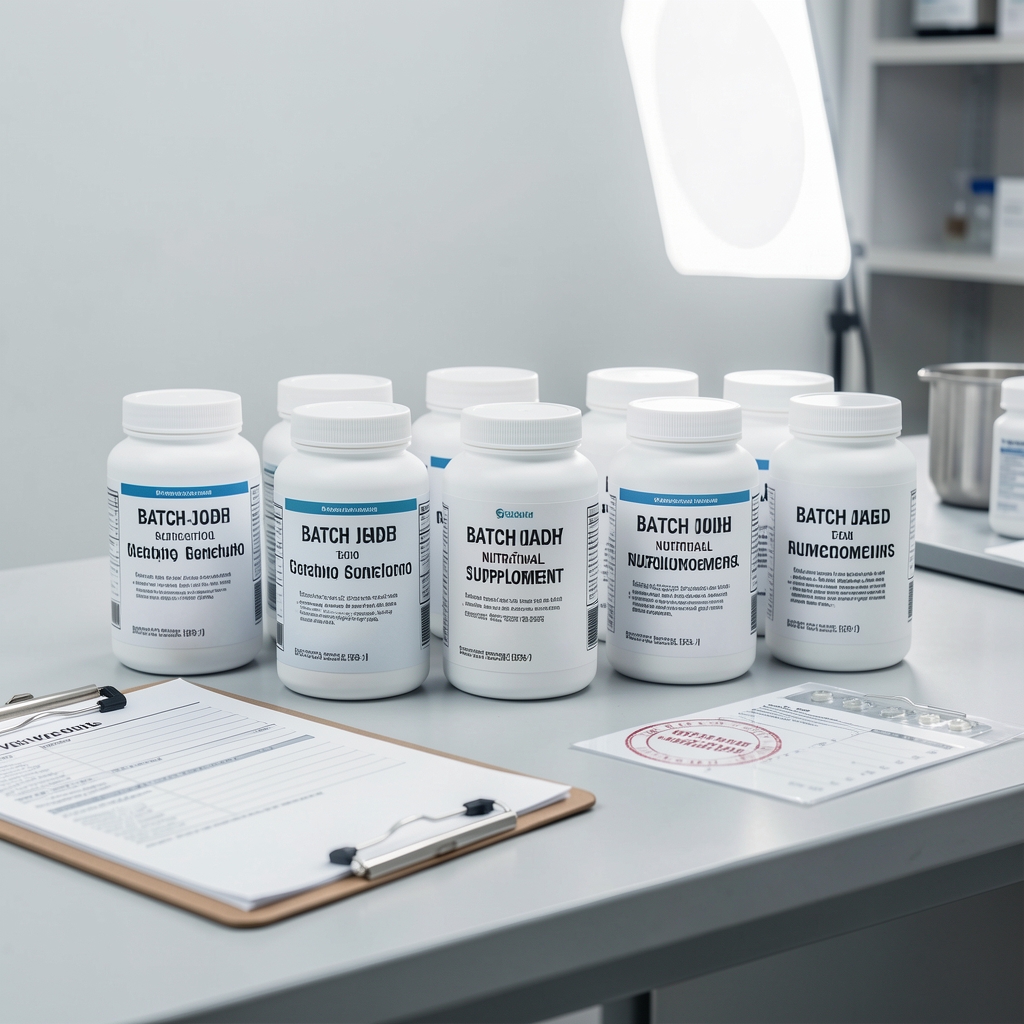
Every product batch is accompanied by independent verification documentation. Lot records are archived and available for review.
Regional Sourcing Priority
Sourcing prioritises Central European suppliers where supply chains allow direct traceability from named-region origin to packaged batch.
Chain-of-Custody Documentation
Each ingredient lot is logged with supplier declaration, batch code, and independent analysis date. The chain-of-custody record is maintained per batch cycle.
Food-Grade Processing Standards
Supplier facilities are evaluated against food-grade processing requirements. Certification documentation is requested and retained per supplier contract.
03 — Archive & Documentation Standards
The Practice Archive
Every consultation at Falenza generates a documented record that is held in the practice archive and made available to the client. Records include: intake questionnaire responses, dietary log data, seasonal food plans (each versioned and dated), macronutrient distribution analyses, follow-up session notes, and any supplementation context documentation.
Archive entries follow a consistent naming convention — client reference, programme year, revision identifier, and date — making it straightforward to locate the precise document that applied at any point in a client's programme history. This structure supports long-format consultancies where plan revisions accumulate over years.
Format
PDF + Practice Copy
Versioning
Revision 01-A → 0N-X
Retention
5 years post-programme
Client Access
Full copy on request
Seasonal Revisions / Year
Each food plan is formally revised at every quarterly seasonal transition for clients on the ongoing guidance track.
Documentation Rate
No consultation output is verbal-only. Every session produces a written record entered into the archive on the same day.
04 — Supplier Overview
How Suppliers Are Evaluated
Supplier relationships at Falenza are maintained through a structured evaluation process that begins before any ingredient is incorporated into a product and continues for the duration of each supply agreement. The evaluation has three stages: initial documentation review, first-batch verification, and ongoing audit schedule.
Initial documentation includes a supplier declaration of origin, facility description, and preliminary ingredient composition data. First-batch verification involves independent laboratory analysis of the submitted batch before it enters active use. The ongoing audit schedule requires re-submission of composition certificates at each new batch cycle.
Suppliers are selected on the basis of compositional consistency, chain-of-custody clarity, and responsiveness to documentation requests. Geographic preference is given to Central European facilities where food-grade processing standards can be cross-referenced against local regulatory records.
05 — Seasonal Food Framework
Romania's Four Food Seasons
Spring — Mar to May
Renewal Produce Cycle
Wild greens, asparagus, radishes, spring onions, young spinach, and early strawberries. Plans centre on lighter, higher-water-content food groups as daylight and outdoor activity increase.
Summer — Jun to Aug
High-Volume Fruit Window
Tomatoes, cucumbers, peppers, courgettes, cherries, apricots, peaches, and watermelon. The summer plan accounts for increased physical activity and higher fluid-food proportion across daily meals.
Harvest — Sep to Nov
Root & Grain Transition
Squash, root vegetables, apples, pears, quinces, and walnuts. The harvest plan begins shifting the macronutrient composition toward slower-digesting carbohydrates and denser vegetables as temperatures fall.
Winter — Dec to Feb
Legume & Preserved Food Period
Legumes, root vegetables, preserved fruits, citrus, and dried goods. The winter plan adapts to reduced local fresh produce availability while maintaining a varied and balanced nutritional approach through thoughtful food combinations.
06 — Evidence Standards
Research-Informed Guidance
Dietary frameworks within Falenza programmes are constructed from published nutritional research. This does not mean every recommendation is individually cited in consultation materials — it means the frameworks used to structure food plans, macronutrient targets, and seasonal rotations are grounded in the body of published evidence on dietary patterns, food group relationships, and activity-aligned nutrition.
The specialist maintains continuing professional development through the Romanian Association of Nutritional Professionals and reviews relevant published nutritional literature on an ongoing basis. Frameworks are updated when meaningful new consensus emerges from the literature — not in response to trend cycles or popular dietary movements.
Published Nutritional Research
Ingredient profiles and food framework structures are selected based on published nutritional research. Sources are drawn from peer-reviewed journals in food science and nutritional epidemiology.
Independent Batch Verification
Supplementation components undergo independent batch verification for quality and labelling accuracy. Third-party analysis documentation is maintained per batch cycle in the practice archive.
Continuous Framework Review
Dietary frameworks are reviewed annually and updated when published nutritional consensus supports a meaningful adjustment. Version-controlled documentation records each framework update with date and revision rationale.
07 — Start
Begin the Programme
Initial intake assessments are available by appointment, Monday through Friday. Enquiries are acknowledged on the same working day.